
Tree surgery isn’t a job for amateurs. Working at height with chainsaws and heavy equipment while staying safe requires specialist training, precision, and thorough safety planning. Yet too many of us hire the cheapest quote without asking questions, only to face poorly executed work, or worse, accidents that could have been prevented.
Before hiring a tree surgeon, you need to know they’re qualified, insured, and working within the law. This guide is here to help you through the essential questions every homeowner should ask a tree surgeon. Understanding what separates a professional team from an unqualified tree lopper could save you hundreds, if not thousands of pounds, protect both your property and your trees’ long-term health.
Are You Properly Qualified and Insured?
This should be one of the first questions you ask, and the answer should be backed up with some evidence. Professional tree surgeons hold NPTC certification demonstrating chainsaw competency and safe working practices at height. Look for arboriculture qualifications such as the RFS Level 4 Certificate in Arboriculture or City & Guilds qualifications that prove they understand tree biology and risk-assessed tree work.
Insurance is non-negotiable as any reputable tree surgeon should carry public liability insurance with a minimum of £5 million cover, though £10 million is increasingly standard for larger operations. This protects you if property damage or injury occurs during the work. Don’t be shy about asking to see proof of both qualifications and insurance as legitimate professionals expect this question.
Will You Check for Tree Preservation Orders (TPOs)?
Many homeowners don’t realise that cutting protected trees without permission is a criminal offence carrying fines up to £20,000. Trees can be protected by Tree Preservation Orders or by being located within conservation areas, both requiring consent from the local planning authority before any work proceeds.
A professional tree surgeon should offer to check statutory protection status with your council as part of their service. They should know the application process for conservation area consent and understand that planning compliance can take six to eight weeks. Be wary of anyone who dismisses TPO concerns or suggests proceeding without checking as they’re potentially putting you at legal risk.
What Method of Work Will You Use?
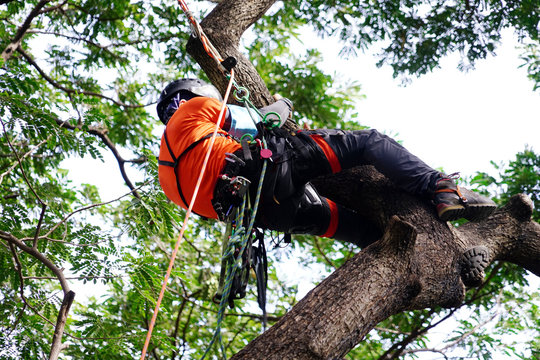
Understanding the planned approach tells you a lot about professionalism and safety standards. Will climbers use rope and harness climbing techniques, or is a will a cherry picker more appropriate for the job? Large or dangerous trees might require sectional dismantling rather than simple felling.
Ask about their method and if they demonstrate they’ve properly assessed risks and have procedures in place if something goes wrong. Risk management should include consideration of surrounding property and protection of your property.

Can You Provide a Written Quote and Timescale?
Never accept a verbal quote. A professional written quotation should clearly define the scope of works, itemise costs, and specify what’s included and excluded. The project timescale should account for site conditions and include realistic contingency planning for weather delays—tree work is often impossible during high winds or heavy rain.
Seasonal considerations matter too. Some pruning is best done during dormancy, while emergency work may need immediate attention regardless of conditions. A detailed quote protects both parties and ensures everyone understands exactly what work will be carried out and when.
Call the Professionals
Professional tree surgeons like the team at Wiltshire Tree Care can save you time and money. If you need a professional tree surgeon, we recommend Tom Ashpole and his team. They’re based near Worton and serve the surrounding area including Devizes, Bradford-on-Avon, Corsham and Marlborough. They provide a range of services including tree surgery, stump removal, grounds maintenance