
Selecting the appropriate foundation is one of the most critical decisions in any construction project. As an experienced groundwork contractor, I’ve seen firsthand how the right foundation choice can make or break a build. The foundation provides essential structural support and must be carefully matched to your soil conditions, building size, and budget. Let me guide you through the main types of foundations and help you choose the right foundation for your project.
Understanding the Main Types of Foundations
Strip Foundations
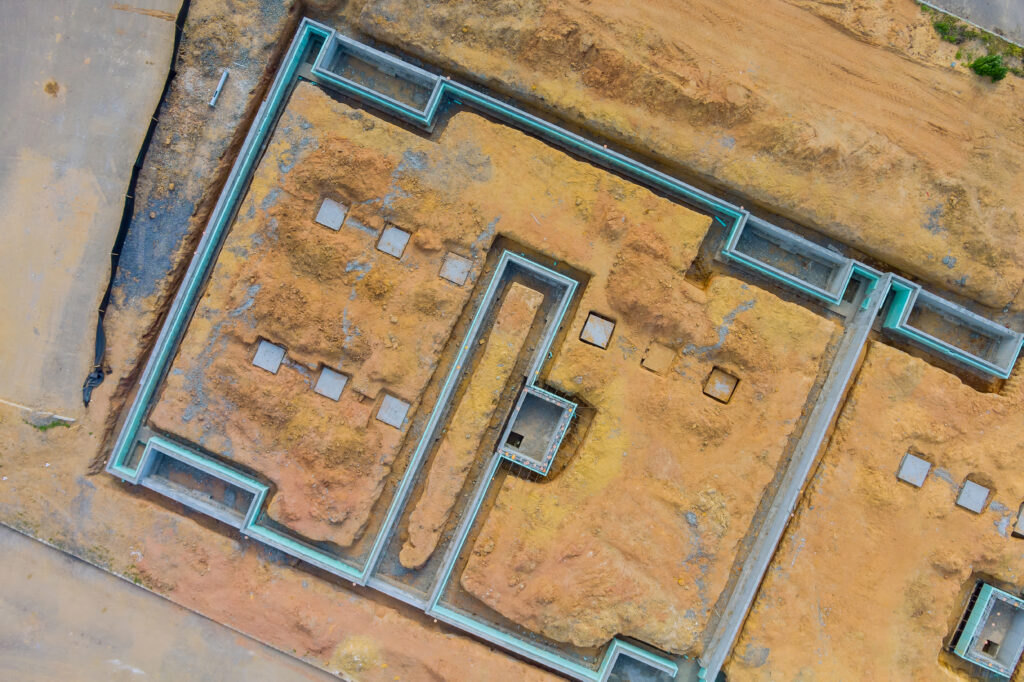
Strip foundations are the most common choice for residential groundworks in the UK. These consist of a continuous strip of concrete that supports load-bearing walls. I recently completed a three-bedroom house extension in Surrey using strip foundations. The soil conditions were firm clay, and the building load support requirements were moderate, making strips the perfect economical choice.
Strip foundations work best on ground with good stability and relatively low moisture content. They’re ideal for new build foundations where the soil can bear at least 75kN/m². From a foundation cost considerations perspective, they’re typically the most affordable option for standard residential projects.
Trench Fill Foundations
Trench fill foundations are essentially a variation of strip foundations but with a deeper, narrower trench filled entirely with concrete. I employed this method on a commercial building foundations project in Kent where we encountered poor ground conditions in the upper soil layers but found stable bearing strata at depth.
This approach is particularly suitable when you need to dig deeper to reach stable ground or when groundwater levels are high. The technique reduces the need for extensive brickwork below ground level, which can actually save costs despite the increased concrete volume. For extension foundations on sloping sites, trench fill often provides the most practical solution.
Raft Foundations
Raft foundations spread the building load across a large area, essentially creating a concrete slab under the entire structure. I’ve used raft foundations on several projects where ground stability was questionable or where soil conditions included soft clay or fill material.
One memorable project involved a commercial warehouse in Essex built on reclaimed land. The variable soil conditions meant that a raft foundation was essential to distribute the load evenly and prevent differential settlement. While raft foundations require more concrete and reinforcement than strip foundations, they’re often the only viable option for challenging sites. They’re also excellent for groundwork design on sites with high water tables.
Piled Foundations
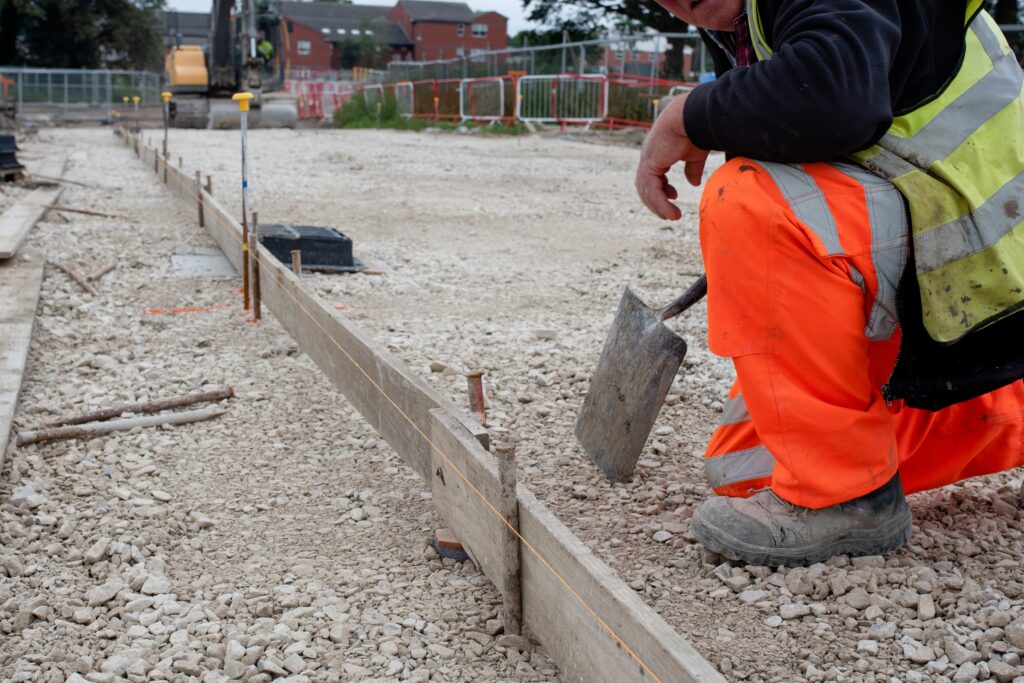
Piled foundations transfer building loads to deeper, more stable soil layers or bedrock. These are the premium option among types of foundations and are essential for large commercial building foundations or when surface soils simply cannot provide adequate support.
I managed a site-specific foundation selection for a four-storey office development in London where the top 8 metres consisted of soft alluvial deposits. We installed driven piles to reach the underlying London Clay, ensuring the structure had the structural support it needed for its 50-year design life.
Professional Foundation Advice from Henry Timmis Groundworks
Whether you’re planning a modest extension or a major commercial development, investing in quality groundworks from the outset will save you from expensive remedial work in the future.
At Henry Timmis Groundworks, they combine decades of experience with modern techniques and equipment to deliver groundworks solutions you can rely on. Their commitment to thorough regulatory compliance and approved construction history means your project starts on stable foundations.